September 23, 2014 – 28 Elul 5774

Yesterday was the second full day that I spent with the AMPGS trial team preparing for a trial that will begin in mid-December. We are literally just at the beginning stages of our trial prep. Days and days will be spent getting myself and the other members of our trial team ready, working with witnesses, drafting the pre-trial pleadings and ultimately trying the case. What is at stake? Money. Lots of money. Why so much preparation? The answer is simple. To win you have to be better prepared than your opposition.

I am proud to say that I am a preparation “freak”. Whether a professional responsibility or a personal matter, I have to be extremely well prepared. I don’t just “wing it”. I am always prepared.

Then why is it that every year as the final days of the year approach, I am concerned that my level of preparation for the most important trial of the year – my trial – which begins Rosh Hashanah eve is woefully lacking? Why is it that I allow the requirements and activities of my daily life to keep me from dedicating myself to the same intense regimen that I employ when getting ready for a trial in a court of man? It’s not that I do no preparation. It’s not that I just show up on Rosh Hashana with machzor in hand and start davening. Of course, I have studied Shaarei Teshuva, listened to shuirim and prepared my davening. But have I prepared with the same level of intensity and dedication as I do when I go into court. No. Why is that?

The last several months of saying kaddish have provided a modicum of extra preparation for the coming days. The progression of events leading to my mother’s final weeks in intensive care, her personal determination and battle with the Angel of Death to make it for one last Shabbos and one last lighting of the Shabbos candles, seeing in real time how things that were important pre-death have no meaning after death have allowed me to view through the prism of death, the everlasting importance of the spiritual and the eternal worthlessness and irrelevance of the material. Each day since that Friday night when my mother passed away as her final Shabbos candles flickered, the saying of kaddish has reminded me again and again, that my primary focus should always be, no matter what I am doing, on spiritual growth. While kaddish is recited by a mourner on behalf of the departed nowhere does this prayer mention death or the departed. Rather, it is a prayer which extolls the greatness of the Almighty. As the Rabbis explain, saying kaddish benefits the soul of the departed not because it is recited to memorialize the departed but, rather,  the departed’s soul is elevated by virtue of the fact that a descendant recognizes and extolls the greatness of Hashem.

My mother a”h left me one lasting gift – kaddish – and it is helped me get ready for the day when I together with “all mankind will pass before the Almighty like members of the flock.”

September 19, 2014 – 24 Elul 5774

For more years than I care to count I have been privileged to be the chazzan (cantor) for yomin noriam (the High Holidays). I have always regarded it as both a great privilege and awesome responsibility. For it is my duty to offer the prayers of this community before the King of Kings as he sits in judgment on each and every individual. It is a responsibility that I take very seriously and for which I prepare months in advance.

When my mother a”h passed away I assumed that due to my aveilus I would not be able to daven for the amud (to be the cantor) this year. Indeed, the issue was raised by various individuals during shiva and I responded that the halachaic decision was for the Rabbi, quite obviously, to make. I was quite surprised when several weeks later the Rabbi approached me and asked if I felt up to davening this year. I said yes without giving it very much thought.

As I began to prepare, without the ability to listen to music due to the aveilus prohibition, I found myself contemplating the events of this past year – my mother’s final illness, her passing, the kidnap of the three Israeli teenagers, and the war in Gaza. I began to realize that this year’s davening would be no easy task. There is much on my mind and tzorchi amcha merubim – the needs of the Jewish People are great.

And so as I get ready to welcome the final Shabbos of 5774 I pray to the Almighty that He enable me, despite my many failings, to be a faithful messenger and worthy advocate for His people. May the prayers offered by every Jew and by communities and chazzanim the world over be accepted with favor and may we all be blessed with a Kasiva Vachasima Tova. A gut gebenched yor.

Good Shabbos

September 15, 2014 – 20 Elul 5774

For the last thirty years save one when we were in Israel, I have traveled to New York to daven at the grave of my father a”h before Rosh Hashanah. It is a widespread minhag (custom) in the Jewish world and Jews of all types, Ashkenazic, Sephardic, observant and less observant visit the graves of their beloved and pray there before the onset of the High Holiday days. This year the logistics of my visit were necessarily complicated by my need for minyanim to say kaddish. After considering various options we decided to go to New York for Shabbos and visit with our son Nachum, his wife Jen and our two grandchildren Kate and Gabe. It was a wonderful and most enjoyable Shabbos. We davened in Rabbi Golden’s shul, Ahavat Torah, an extremely large shul with many minyanim and an absolutely enormous and exquisite building.

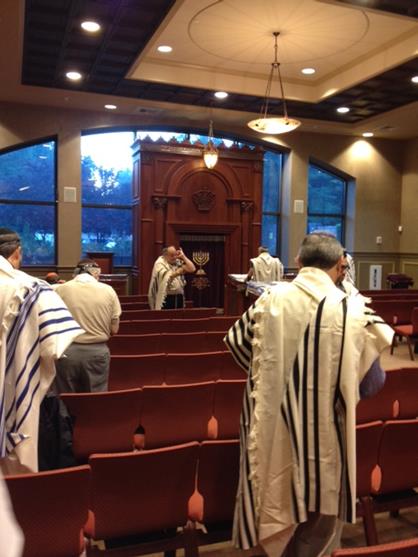
Sunday morning I began what would be a very long and stressful day at the 7am minyan in Ahavat Torah held in an absolutely beautiful beis medrash.


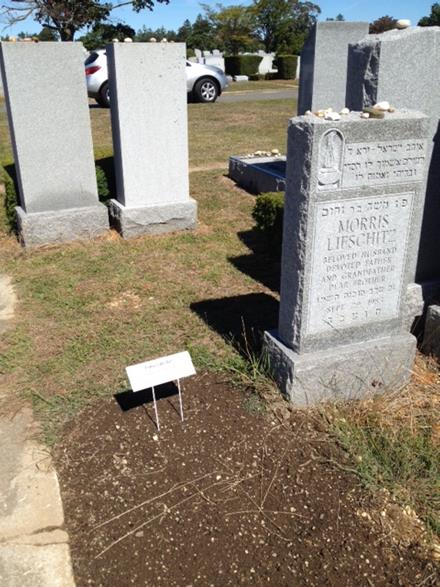
At about 9 am we drove to visit my in laws in Lawrence, where Marilyn remained while I left for the cemetery. First, I drove to the New Montefiore Cemetery on Long Island where my parents are buried. It was the first time I was there since my mother’s funeral in May. Suffice it to say it was draining. In one respect, however, it was “comforting” to see my mother and father resting side by side, reunited after thirty years of separation due to my father’s death in 1985. My parents had an incredible marriage and my mother never recovered from the loss of my father. Each visit to the cemetery with her was difficult, to say the least; so much so that after several years I began going to the cemetery alone.


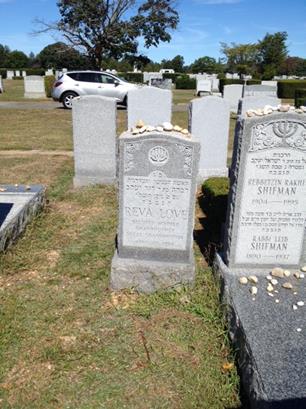
After saying tehlim at my parents’ graves I recited tehilim at my grandmother, Reva Love’s a”h kever. My grandmother raised me. Her love was unconditional and every time I stand before her grave I feel her love all over again.


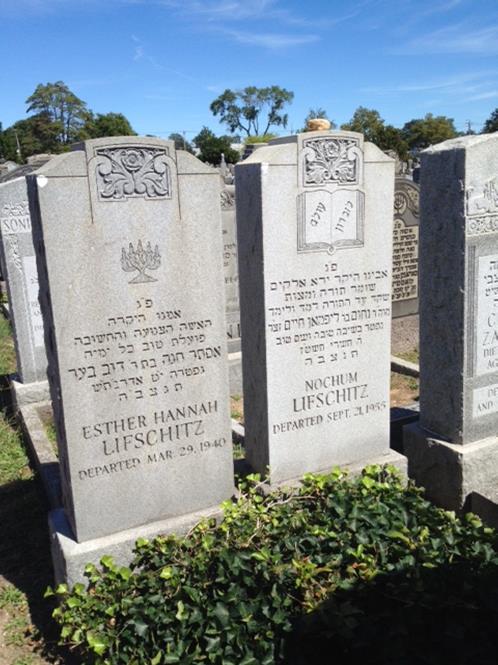
During shiva for my mother I learned for the very first time that my father’s parents are buried in the Montefiore Cemetery in Queens. On the web I was able to find the exact location of their graves. After concluding at my parents’ kevoros I drove to Queens to daven at the graves of my paternal grandparents. I never knew these grandparents. My grandmother Esther Chana Lifschitz died many years before I was born. My zaidi Reb Nochom Lifschitz zt”l died when I was two years old and I have no recollection of him. He learned in Slobodka and was a great talmid chochom (torah scholar). When I was a teenager my father was willing to take me with him to his parents’ kevoros before Rosh Hashanah but my mother would hear nothing of it. She did not think it appropriate for children to go to a cemetery while their parents were alive. So I never went – until yesterday.

I arrived at the cemetery thanks to Waze and began to search for the graves. After a half an hour of searching in the poorly marked old section of the cemetery, I found their graves. For the first time in my life I met my paternal grandparents.

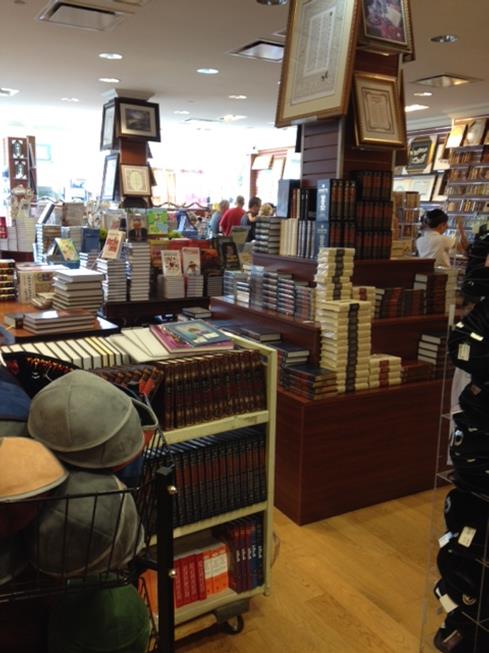
I recited tehilim for a while and then it was time to leave and search for a mincha minyan. I needed to daven mincha in New York before we began the drive back and I needed to get back no later than 10pm so that I could get the last maariv minyan in Silver Spring. I was hopeful but stressed that the logisitics and traffic would cooperate. After a few phone calls to my father in law I learned that there was a 2 pm mincha in a kosher supermarket, Brachs. I drove straight there only to be told that there is no mincha minyan in the store on Sunday. Determined to find a minyan, I recalled my father in law mentioning that there was a minyan in one of the seforim (Jewish bookstores) on Central Avenue in Cedarhurst. I drove to Central Avenue and went “door to door” until I found a store, Judiaca Plus, that had a minyan at 3 pm. And that is where I ended up davening. At a little after 3pm they shut the music off, made an announcement that mincha would be held in the back of the store in between the book shelves, took out a box with sidurim and a few pushkas and asked if there was a chiyuv (mourner) present. Since I was the only chiyuv (mourner) I was given the amud (to lead the service). I assumed that they would make a “heicha kedusha” but was quickly told no – they repeat the shemonah esrei in this back of the store minyan. And so I davened for the amud together with 15 others and upon concluding sighed a sigh of relief that mincha was accomplished. Now all I needed to do was drive home and catch the last maariv minyan at 10pm.


For once there was no traffic on the Turnpike. We arrived home at about 9 pm with an hour to spare before maariv. We eat a quick dinner and while Mrilyn went off to bed I went to the yeshiva to daven maariv.

At 10:30 pm I returned home and concluded my long day of mourning and saying kaddish.

September 12, 2014 – 17 Elul 5774

Yesterday I had no choice but to abandon my regular minyan and daven instead at a local “rocket minyan”. An early morning meeting with a new client dictated that I would be saying kaddish at the “rocket minyan”‘ in lieu of my regular venue which would have ended too late for me to make my meeting on time. I did my best to try and “keep up” with the accelerated pace of the “rocket minyan”. It was a bit of a challenge as the entire davening was over in a mere 35 minutes, including krias hatorah! (reading of the torah).

As I left the minyan and began driving to my meeting I tried to reconcile the approach to davening of the rocket minyan” with the month of Elul and the soon to be upon us period of the yomim noraim (High Holidays). I was reminded of an insight of the saintly Klausenberger Rebbe zt”l.

The Rebbe commented on the unique practice of Jewish communities the world over of singing the kaddish on Rosh Hashana and Yom Kippur. At no other time during the year does this practice exist. Why, asked the Rebbe, do we sing the kaddish at this time?

The Rebbe explained: our singing of the kaddish is an expression of our immense joy of having been given the opportunity by the King of Kings to speak directly to Him, one on one, to cry our hearts out to Him, to tell Him what is on our minds and to beseech Him for all that He in His infinite wisdom determines is best for each of us, our families, the Jewish People and the world at large. We are so overwhelmed at having been afforded such an opportunity that we simply cannot contain ourselves. And so when we recite the kaddish and proclaim through its words the Almighty’s greatness we sing out in praise.

It is indeed a challenge to approach prayer as a one and one conversation with Almighty. But if we are ever going to try and get there Elul is the time to begin the transformation of our prayers, including, the saying of kaddish into a very personal conversation with the King of Kings. May we use the days ahead to accomplish this goal.

Good Shabbos.


September 10, 2014 – 15 Elul 5774

My Rebbe Rav Dovid Lifshitz zt”l used to tell how on a trip to Israel he made a point of stopping in Rome so that he could daven under the infamous Arch of Titus. He wanted to demonstrate that centuries after the Romans pillaged Jerusalem and the Beis Hamikdash (the Temple), the Jewish People not only survived but were flourishing.

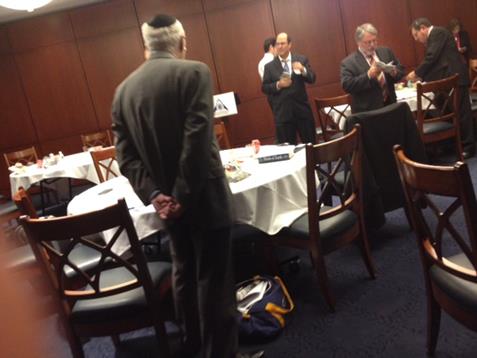
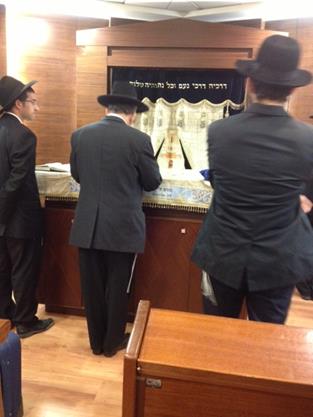
Today I was reminded of this story today when I had occasion to say kaddish at a mincha minyan in the US Capitol building.


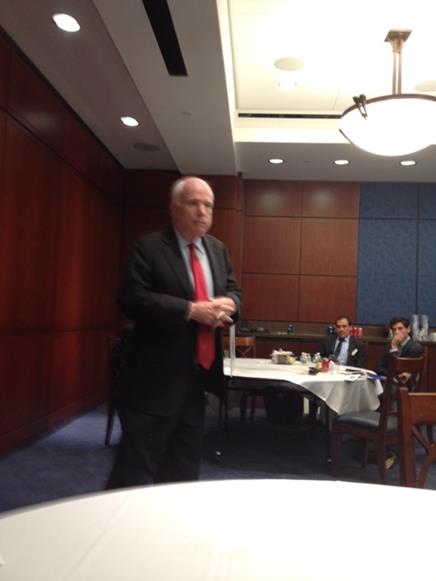
The circumstances were obviously quite different – I was invited by my good friend Bob Levi to participate in a National Council of Young Israel Washington Leadership Mission to the White House and the Congress. Nonetheless, it felt rather incongruous to me that here I was davening mincha and saying kaddish after a presentation by Senator Ben Cardin and before Senator John McCain was to address the gathering.


In one fundamental sense, however, the message was the same. Standing in the halls of power of the most powerful country in the world, listening to the statements and analyses of powerful White House officials and Congressional leaders, I could not help but repeat to myself – There is a Creator who rules every aspect of the universe, every moment of every day and every night. It is He who we should be beseeching and is is only upon Him we can, should and, must rely.

September 8, 2014 – 13 Elul 5774

This past week, for the first time since I sat shiva, I visited two shiva houses. The two shiva houses were stark contrasts. One mourned the death of an over ninety year old father, grandfather and great-grandfather. One mourned the tragic death of a twenty five year old son who had yet to live his adult life. One mourned the passing of a generation. The other mourned a young life cut short. Both reminded me of how the seven days of mourning provide clarity of what is (or should be) important in one’s life and what is not (or should not be) important in one’s life. As I have noted months ago, the challenge is to integrate this lesson into one’s post-shiva daily life. For I would submit, there is a natural human tendency to slowly revert back to old ways and become once again primarily consumed by the “mundane” non-spiritual world around us and only secondarily involved in spiritual pursuits.

Leaving these shiva houses I reflected on myself and whether I have succeeded in reordering my priorities. I must admit that I have not been too successful in this endeavor. Even at this introspective time of the Jewish year, the month of Elul, when one is charged to put aside the physical world around us and prepare for the day in which we will have to argue our case before the Almighty, I struggle to find the time to prepare for my personal “trial”, to learn Shaarei Teshuva daily, and to even review and prepare for the davening of Rosh Hashanah.

Saying kaddish for eleven months keeps one connected to the memory of the departed and to the lessons of shiva. It is, however, way easier to say kaddish than it is to reorder one’s priorities.

September 4, 2014 – 9 Elul 5774

Tonight I finally beat the Satan at his own game. I had to be in Columbus today for an all day meeting. To make minyanim, I departed BWI on a 9:30 pm flight last night. While that meant that I did not get to my hotel until after 11 pm it enabled me to make maariv and day kaddish before I left for the airport. Shachris was per my Columbus routine. Leave the hotel a little after 6am, go to Ahavas Shalom for the 6:40 minyan, return to my hotel and go to my meeting.


Mincha maariv was going to be a bit more dicey. Mincha was at 6:20pm and my flight was at 8 pm. Since I had to drive to the airport, return the rental car, and get through security all in time to board, I decided that I would daven mincha, leave for the airport and with luck , upon my return to Maryland, make the end of maariv at the Yeshiva or worst case try and put a minyan together at the Yeshiva to answer a kaddish deraban after I learned a mishna. Not the preferred approach but given the time for davening and flight schedules it seemed like the best plan I could come up with.

I went to shul for mincha and while there checked my Southwest app for my flight status. Lo and behold my flight was delayed, first 15 minutes than an hour. Little did the Satan know that this flight delay worked in my favor. I was able to stay for maariv and say kaddish. I even had time to run to the kosher supermarket to get something to eat!

For once I defeated the Satan at his own game! Thank G-d!

September 2, 2014 – 7 Elul 5774

Our tradition instructs that “getting the amud” i.e., serving as the chazzan (cantor) leading the davening, is of greater significance for the departed than then the saying of kaddish. During shloshim (the first thirty days of mourning) it is easy to lead the service because a mourner at  the beginning of his mourning period has priority over all others. After the first thirty days it can be hit or miss depending on where you are davening and who else is present.

While in Israel this past month I rarely served as the chazzan; partly because the opportunity was not available and partly because I did not seek the amud. Quite frankly, I was “intimidated” by the many different nuschaos hatefilah (versions of the prayer service), versions of the kaddish itself and the many different customs of when to say kaadish. I never knew exactly when and what to say kaddish so I avoided serving as chazzan except in a few instances at the Kotel where I was able to organize an “American minyan”.

Now that I am back home I have encountered a new “obstacle” to my “getting the amud” – new aveilim in shloshim who by right have priority over me. The introduction of others with a newer loss than mine and with the priority that goes with it, has shed light for me on the ever present cycle of life and death. “Dor holeach v’dor ba”. “A generation leaves and a generation arrives”.

It is natural to be focused on one’s own life experience; to view the events of one’s life as unique, as individual. “My” losses, “my” suffering are “mine” and so they are uppermost in my conscious of primary focus and concern. One loses sight of others  and what they are going through. One fails to pay sufficient attention to others who are also suffering perhaps to the same degree and perhaps to greater degree; perhaps suffering a similar loss or a more painful loss; perhaps with the same difficulty or a more significant difficulty and maybe even a  tragedy. Having to step aside and allow others to “get the amud’ is a vivid reminder to me of how one’s life must be lived in the context of  and with concern for the lives of others.

In the months since I began saying kaddish, kaddish started with the uniquely personal loss of my mother a”h. While that remains and will always remain the primary purpose for my saying kaddish, my reciting of kaddish has expanded in purpose as events in Israel developed over the last several months. My new found “difficulty” in “getting the amud”, even at home, is yet another lesson in the need to share in the suffering of others. While I still have a priority over many, those with newer losses and fresher pain come first. My loss and my pain have a place in this world; but they do not occupy the world.

This is a life lesson and one particularly appropriate for the month of Elul.

August 29, 2014 – 3 Elul 5774

I am quite sure that I have discovered one of the Satan’s most potent weapons to keep me from saying kaddish – flight delays! Allow me to explain. We were to leave Israel Monday on a 10:40 am flight. Late Sunday, via email, we were informed that the flight departure was delayed to 2 pm. That was ok as it gave a few extra hours to enjoy Jerusalem while still giving me plenty of time to find a maariv minyan in New York.

Monday I woke up early and attended the 6 am shachris minyan at Yeshurun. So far so good. We left for the airport at 10:30 am, got through security etc. in no time, and planted ourselves in the King David Club. I asked at the Chabad tefilin outpost what time the mincha minyan would be held and they told me 1:15pm. Perfect. We “shmayed around” the duty free shops for a while and then went back to the club only to learn that our flight was now delayed another two hours. Maariv was now at risk.

At 1:10 I went to the airport shul and davened mincha.


We boarded the flight at 4 pm but the plane did not take off until 5 pm. We landed at JFK at 10 pm and did not get to our car until after 11 pm. Maariv with a minyan was now out of the question. Once again air travel delays did me in!

We got home at 3 am. I slept for an hour or so, helped Marilyn with the kids so they could get off for their flight to Saint Louis, and made the 7:30 am shachris minyan at YISE. Our amazing and inspirational visit to Israel with Moshe and Adina was now officially over. I was back to saying kaddish in galus.

August 27, 2014 – 1 Elul 5774

I began writing this post during our El Al return flight to JFK. The flight, which was originally scheduled for a 10:40 am departure, was rescheduled to 2 pm and then delayed again at the airport two more hours. The rescheduled departure gave us a few more hours in Jerusalem, an unexpected gift which enabled Marilyn and me to enjoy a quiet coffee on the Ben Yehuda midrachov (outside mall) before leaving for Ben Gurion.

Since our return to Jerusalem from three days of touring the north, I concluded my Israel minyanim uneventfully. Friday shachris I walked to the Old City to the Hurva synagogue one last time. After davening, camera in hand, I went up into the ezras nashim (women’s section) to shoot some photographs. Of all the Israeli shuls in which I davened this trip, the Hurva stood out both in terms of the quiet seriousness of the davening and the magnificent beauty of the shul itself. It is a place where, for me at least, the physical enhanced the spiritual.
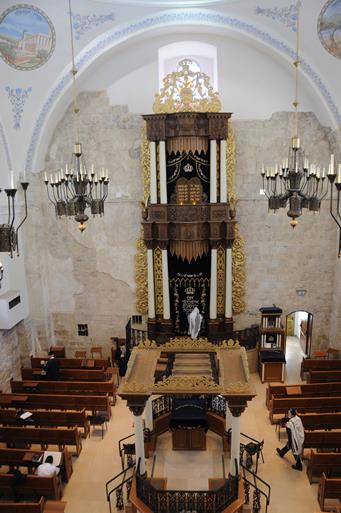
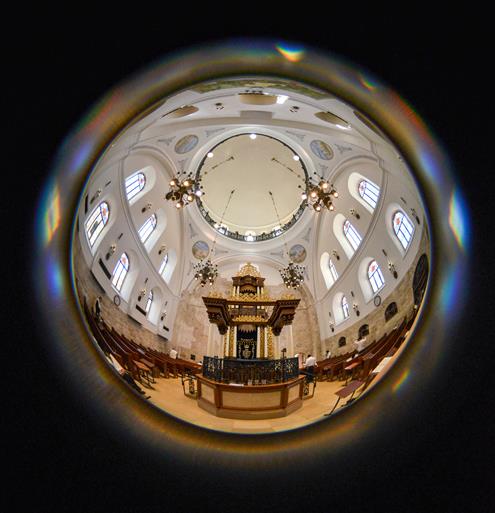
After davening I took the kids to Machne Yehuda to see how Jerusalemites get ready for Shabbos. They really enjoyed the hustle and bustle of the market – especially when I took them to the candy store to stock up on Israeli candy. And stock up they did!

From there we took the light rail to Shaar Yaffo where we met Marilyn and returned to the Old City for some shopping. There is a store in the Old City, Rivkah’s, where we have shopped for years. The owner was pleased to see us and after making some purchases he took me and Moshe to the Ramban shul to daven mincha. In years past I have davened shachris in the Ramban at the 7am minyan where Rav Nebentzhal, Chief Rabbi of the Old City, attends that minyan daily. This trip this Friday mincha was my first time at the Ramban. It was an efficient minyan attended, as it turned out, by many Americans.
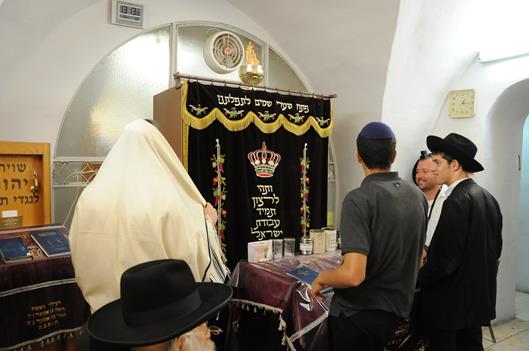
I left it up to Moshe to decide where we would daven Friday night Kabbolos Shabbos. He wanted to return to the Kotel and daven at a minyan (non- Chassidic) of his choice. As the Shabbos siren sounded, we enjoyed a pleasant walk down Yaffo Street to the Old City, thru the Rova (the Jewish quarter) down the steps on last time and onto the packed Kotel plaza which reflected the diversity of the Jewish people – Ashkenazic and Sephardic, Chassidic and Yeshivish, Charadi and Chardalnicks, religious and non-religious, residents and tourists – and of course, especially special during the current times, chayalim (soldiers) in uniform – siddur in hand and M-16 draped over a shoulder. Moshe selected an American minyan next to a Yeshivish Carlebach minyan. The inevitable mixture of sound and nussach added to the unique experience of welcoming the Shabbos at the Kotel. The davening was punctuated by sounds of a nearby minyan which included many chayalim and which began with intense singing and dancing exemplifying the spirit of these young warriors as well as the intense love and respect which the these young defenders of the Jewish people and the Land of Israel both deserve and enjoy.

Shabbos morning we went to the 8am minyan at the Yeshurun Central Synagogue on King George Street. The shul’s physical beauty lies in its dignified simplicity and the davening reminds me of my youth at the Queens Jewish Center; nussach Ashkenaz, a professional Chazzen, no choir and a religious Zionist congregation. It was Shabbos mevarchim Elul and the Chazzen’s nussach was an especially appropriate beginning to the period of teshuva.

Interestingly, while there was large number of attendees, there were only a few saying kaddish. Indeed, much to my surprise throughout our stay in Israel, I found, again and again, that in virtually every minyan I attended I was often the only aveal.

At alaenu someone came up to me and asked if the person standing with him could recite the kaddish together with me. We looked at each other and virtually at the same time asked from where we knew each other. We soon determined that it was from the shul in Columbus. The familiar looking gentleman was none other than Rabbi Ackerman, the rabbi in the shul in which I had recently davened in Columbus.

After davening I walked the two blocks down King George to the Great Synagogue to see if I could catch a part of the davening of the world famous Chazzan Adler. Unfortunately, the services were concluding and I will have to try again on my next visit to Jerusalem. We returned to Yeshurun for mincha and davened maariv in the Jerusalem Plaza hotel where said good-by to Marilyn’s parents who were returning to New York after Shabbos.

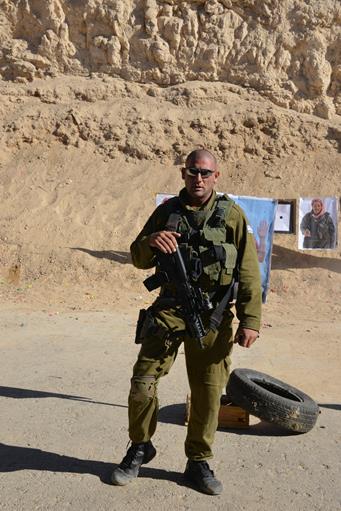
Sunday was our last full day in Israel and we planned another full day of touring and education for the kids with Gershon. I davened Shachris at the 6 am minyan in Yeshurun so that we would be ready for our 7:15 am pick up by Gershon. We began the day in Efrat at Caliber 3, an anti-terror training facility that allows tourists to experience simulated training. For the kids the shooting range and krav maga training was great fun. For me the real import of the visit was meeting the people. Our instructor was a man by the name of Eitan, a former Givati brigade special forces anti-terror officer. While he clearly is an extraordinary warrior, he is even more so an extraordinarily compassionate Jew whose mission in life is the defense of the Jewish people. The entire trip to Israel was worth it just to spend time with Eitan.

From there we went to the museum at Gush Etzion. On the way we stopped at the bus stop where some two months ago Eyal, Gilad and Naftali were kidnapped. The location has become a defiant memorial to these there young souls.
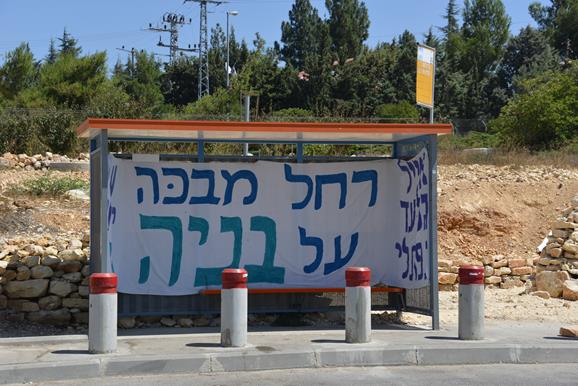

After the Gush we returned to Jerusalem for an emotional conclusion to our visit. We visited Har Herzel and the graves of too many holy souls who have sacrificed their lives for the return of the Jewish People to Eretz Yisrael. We paid our respects to Hannah Senesh, Yoni Netanyahu, the Dakar submarine crew and many others, well known and not so well known, including Nisim Gini, a boy of ten who died in 1948 in the defense of the Old City of Jerusalem.
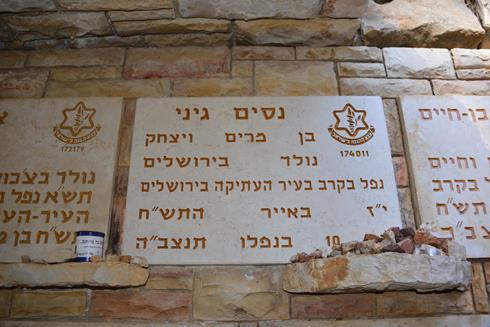

Each step brought more tears to my eyes. Saying kaddish will never be the same.